The History of Roulette: Pascal's Accident and the Green Zero
How a failed perpetual-motion experiment became the symbol of the European casino.
Reviewed by the Casinokeller editorial team · Editorial policy
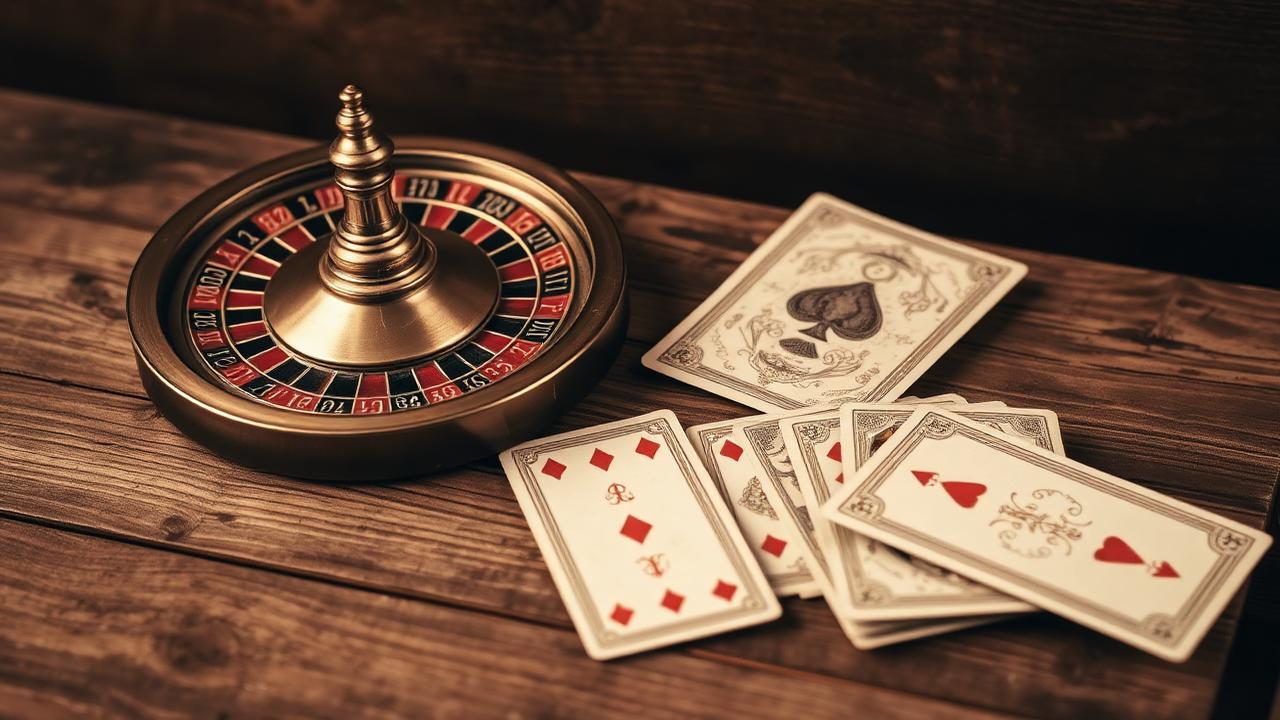
Roulette — French for 'little wheel' — has been the icon of European casinos for over 250 years.
Pascal and chance (17th c.): French mathematician Blaise Pascal experimented with a frictionless wheel around 1655, trying to build a perpetual-motion machine. The experiment failed but accidentally produced the template for a gambling device.
First true form (18th c.): In late-1700s Paris the wheel took its modern shape, with numbers 1–36 plus a double zero.
The green zero of Homburg (1843): Brothers François and Louis Blanc introduced a single-zero wheel in Bad Homburg to lower the house edge and attract players from France, where gambling was banned. The European variant was born.
Monte Carlo: After Germany banned gambling in 1872, the Blanc family moved to Monaco and built the Monte Carlo Casino into the world's roulette capital.
American variant: The game reached the US via New Orleans, where operators reverted to a double-zero (0 and 00) wheel — nearly doubling the house edge from 2.7% to 5.26%.
Online and live: Both variants now exist online, joined by live-dealer tables and game-show formats like Lightning Roulette with multipliers up to 500x. The underlying math hasn't changed since the 19th century.
All roulette rules in one place: Wheel layout, every inside and outside bet with its payout, La Partage and En Prison — explained in our foundation guide Roulette rules explained simply.