Why Near-Misses Are Addictive — The Psychology of Almost Winning
Two sevens on the reels, the third just above the line: in the brain it almost feels like a win. The mechanism is well researched — and deliberately exploited.
Reviewed by the Casinokeller editorial team · Editorial policy
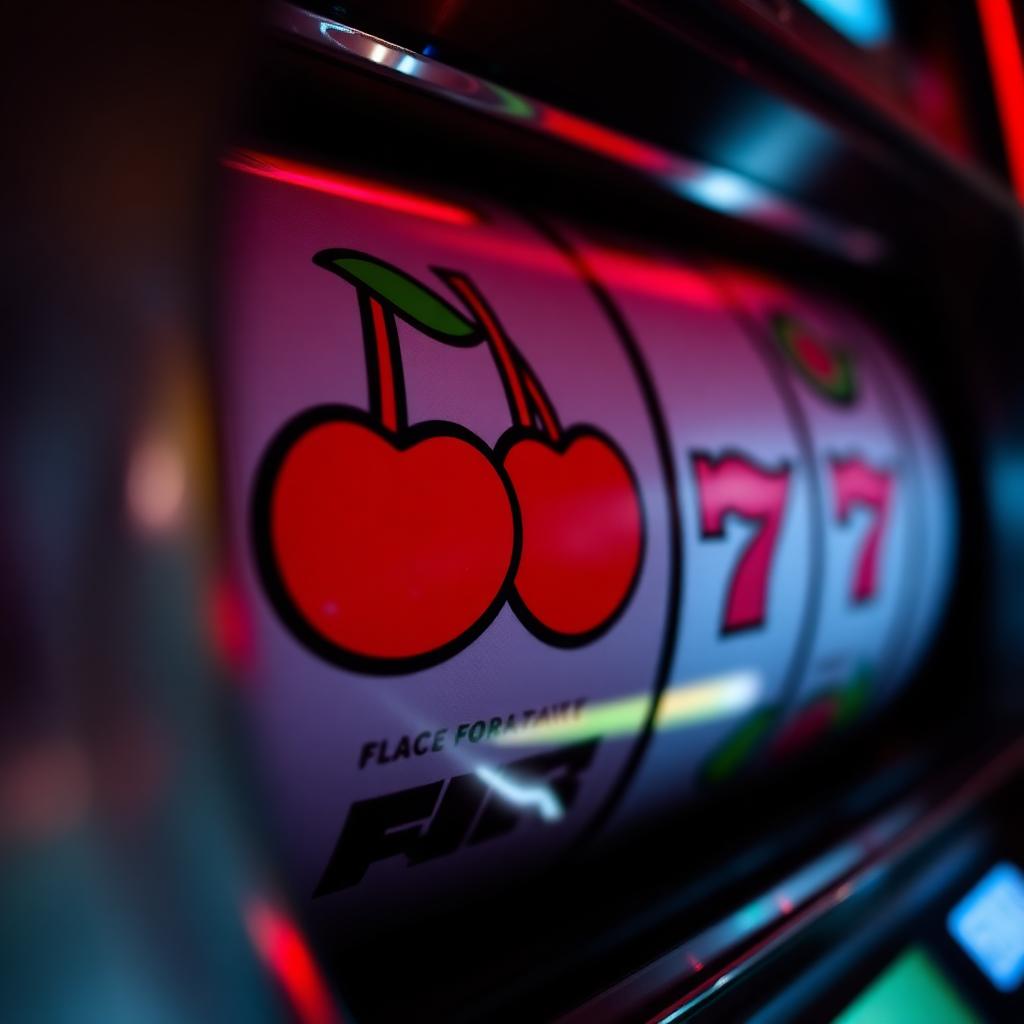
You spin the slot. Seven — seven — and on the third reel the seven stops just above the line. No win. But your pulse is up anyway, and the next press of the button feels almost mandatory. What you just experienced is called the near-miss effect — and it's one of the most studied phenomena in gambling psychology.
What happens in the brain? Imaging studies (notably Clark et al., 2009, in “Neuron”) show: near-misses activate the ventral striatum and the insula — brain regions that normally respond to actual rewards. The body releases dopamine even though objectively nothing was won. The brain registers the near-win as “almost there” and codes it as a learning signal: keep going, the next hit is close.
The problem with that logic: in games of independent random events (slots, roulette) a near-miss is objectively just as meaningless as a clean loss. The probability of a win on the next spin is exactly the same. Yet the brain executes the opposite — an evolutionarily useful heuristic (“that spear throw was close, so practise”) becomes a trap in a stochastic system.
How is the effect used in slot design? Modern slot software lets developers configure symbol frequency per reel independently. That means high-value symbols (e.g. the jackpot wild) can be densely placed on the first two reels and extremely rare on the third. The result: you see disproportionately many two-hit-and-near-miss outcomes. Mathematically this is fully consistent with the declared RTP — emotionally it's a machine that almost continuously feels “just shy of a big win”.
Older slot machines (so-called “tube stops” designs) were restricted in some jurisdictions for exactly this reason: the UK Gambling Commission, for example, has classified certain near-miss designs as misleading. In online casinos, independent test labs (eCOGRA, GLI) certify the mathematical correctness — but not necessarily the psychological impact of the symbol distribution.
Who is especially vulnerable? Studies (e.g. Habib & Dixon, 2010) show that near-miss effects are amplified in people with problem-gambling tendencies. They interpret near-wins more strongly as harbingers of upcoming wins — the “illusion of control” bias compounds the learning signal. This same group most urgently needs self-exclusion mechanisms.
How do you spot the effect in yourself? Three warning signs. First: you feel more motivated to keep playing after a narrow loss than after a clean one. Second: hours later you remember the near-misses better than the actual losses. Third: you catch yourself saying things like “the next one has to come” — that's the gambler's fallacy, often triggered by the near-miss experience.
What helps? Time and loss limits set before a session and not changed mid-play. Breaks that interrupt the dopamine plateau. If you notice that near-misses drive you harder than real wins motivate you, that's the point at which a voluntary self-exclusion (e.g. GAMSTOP in the UK) becomes a sensible safeguard. Free, anonymous help is available from BeGambleAware.
The near-miss effect isn't a weakness — it's a feature of human perception that becomes a trap in a stochastic environment. Knowing it doesn't switch it off, but it lets you push back against it consciously.