
Poker Variants Compared: Texas Hold'em, Omaha, Stud and Draw
Which poker variant suits which player? Rules, hand strengths, variance and common mistakes across Texas Hold'em, Pot-Limit Omaha, Seven Card Stud and 5 Card Draw — compared with the maths.
Reviewed by the Casinokeller editorial team · Editorial policy
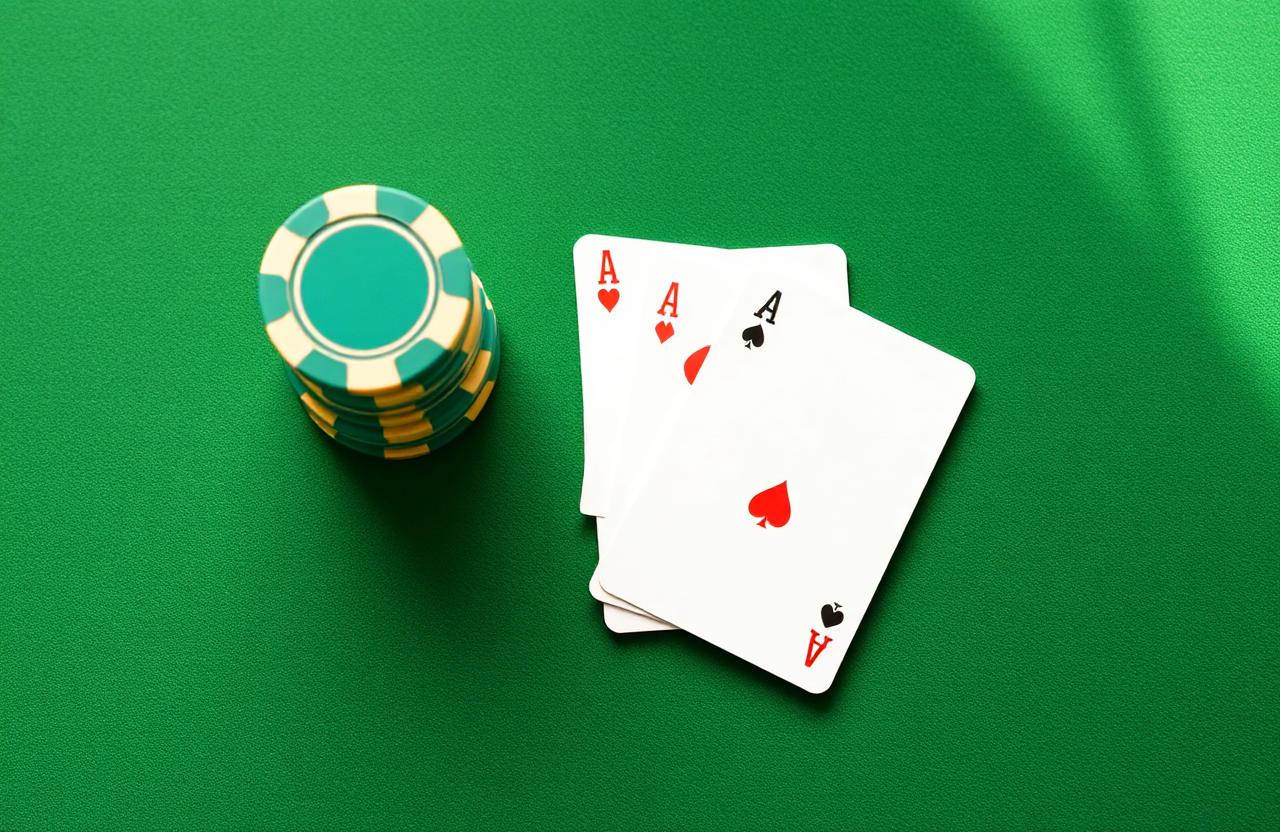
Poker isn't one game, it's a family. Texas Hold'em dominates online rooms and live tournaments, Omaha is growing fast, Stud keeps a loyal niche, and Draw is the root of every modern form. This article compares the four main variants with the maths behind them: rules, average hand strengths, variance and typical beginner mistakes.
Texas Hold'em — the de-facto standard. Two hole cards per player, five community cards (flop, turn, river), four betting rounds. Best five-card hand from seven wins. No-Limit Hold'em allows all-in at any point, which massively raises variance. A skilled player at a 6-max cash table with solid opening ranges (top 20%) can expect a winrate of 3–8 bb/100 hands.
Pot-Limit Omaha (PLO) — the fast alternative. Four hole cards, but you must use exactly two of them with three community cards. Sounds harmless, changes the maths completely: nutted draws are the norm, and equities between two-way hands often sit in the 40:60 range instead of 80:20. Variance is much higher, so PLO players need 40–60% more bankroll per limit. Beginners chronically overvalue two pair on wet boards.
Seven Card Stud — poker without community cards. Each player gets seven cards (three hidden, four exposed), five betting rounds. Because so many cards are visible, observation matters more than in Hold'em. Stud is almost always Fixed-Limit, so variance is 25–40% lower than in no-limit formats. Perfect for grinders, less so for casual players.
5 Card Draw — the classic root. Five hidden cards, one draw round, two betting rounds. Strategically simpler but information-poor, which makes reads and position more important than raw hand strength. Rare in the EU/DE online landscape but still alive in home games and retro tournaments.
Hand strengths compared. A full house in Hold'em is strong; in Omaha often just medium, because four hole cards spawn far more full-house combos. In Stud, two pair often wins because visible cards limit bluff room. In Draw, two pair (aces up) is solid because only one draw round exists.
Variance and bankroll rule of thumb. For a solid player: NLHE cash game 30–40 buy-ins per limit, PLO 50–75, Fixed-Limit Stud 300 big bets, MTTs 100+ buy-ins. Ignore these and variance will regularly threaten your bankroll — regardless of skill. Our bankroll simulator shows how quickly variance eats an undersized bankroll.
Typical beginner mistakes per variant. Hold'em: too many speculative hands out of early position. Omaha: overvaluing two pair on wet boards. Stud: not counting 'live' outs (unseen cards). Draw: drawing too many cards and giving away hand strength.
Poker vs casino games — the EV difference. Unlike roulette or slots, poker has no fixed house edge in the hand — the room takes rake (typically 5%, capped at €3–5). A player who's better than the field has positive EV but has to beat the field by enough to cover rake. Our house edge calculator helps compare true cost-per-hour.
Regulation in Germany. Since the GlüStV 2021, online poker is licensed and supervised by the GGL on the official whitelist. Cash games face strict stake and table limits. Playing at unlicensed rooms risks payout problems and legal grey zones.
Bottom line. For beginners, Texas Hold'em is the best pick: most literature, biggest fields, cheapest limits. Action-seekers move to Omaha. Stud and Draw are niches today but useful for learning the fundamentals. Whatever the variant — solid opening ranges, position awareness, bankroll discipline and emotional control still win.
Frequently Asked Questions
- What poker variants are there?
- Four main families: community-card poker (Texas Hold'em, Omaha), stud poker (Seven Card Stud, Razz), draw poker (Five Card Draw, 2-7 Triple Draw) and mixed games such as H.O.R.S.E.
- Which poker variant is best for beginners?
- No Limit Texas Hold'em — two hole cards, clear betting rounds, and by far the most learning material and low-stakes tables available.
- What is the difference between Hold'em and Omaha?
- Hold'em gives you two hole cards and you may use any number of them. Omaha gives you four and you must use exactly two with three community cards, which raises both hand strength and variance.
- Is poker luck or skill?
- Luck dominates short term, skill dominates long term. Poker is played against other players, not the house — the operator earns rake, not a house edge.