
Hot and Cold Slots — Probably the Most Stubborn Myth in the Casino
“This slot is about to pay out, it hasn't given anything in ages.” Sounds logical — and is mathematically completely false. A short calculation shows why.
Reviewed by the Casinokeller editorial team · Editorial policy
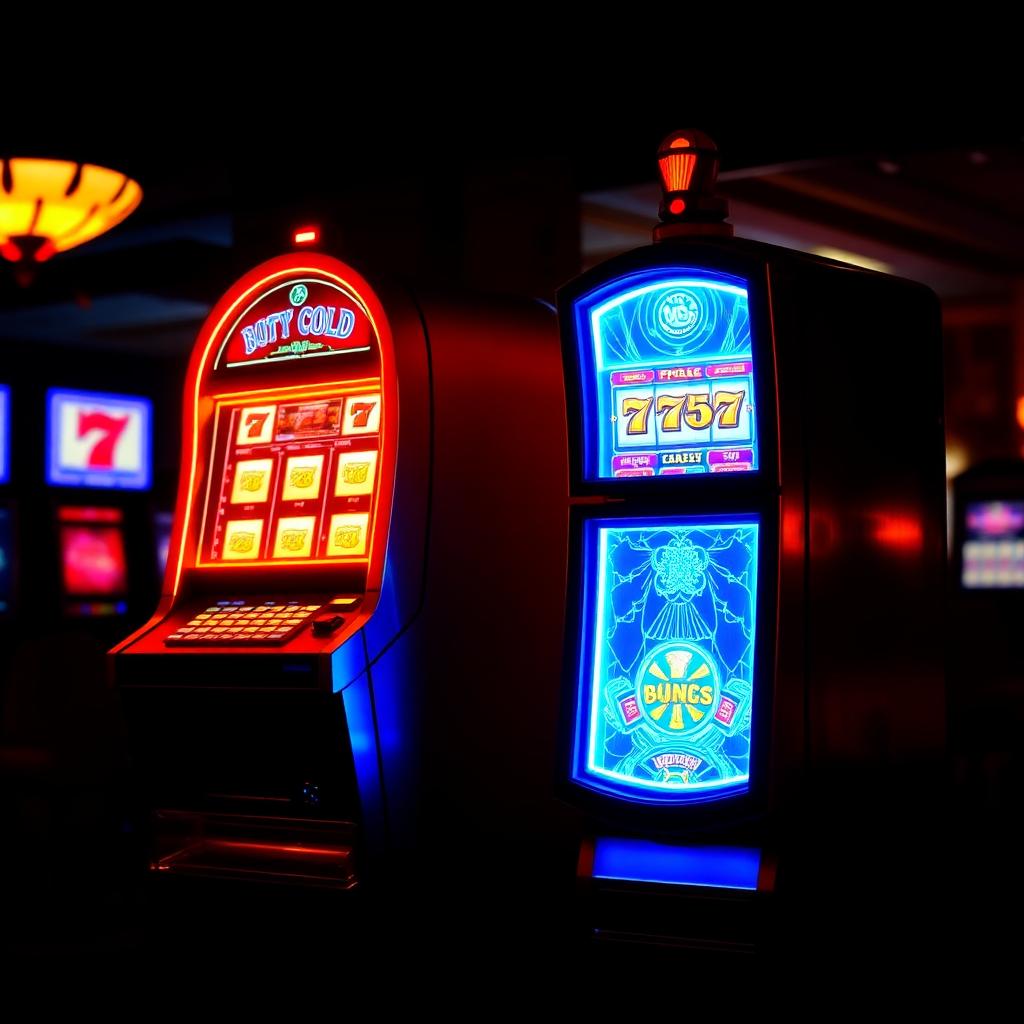
Ask ten regular slot players and at least seven will confirm: some machines are “hot”, others are “cold”. One that hasn't paid in a while is “due”. One that just spat out a win “needs a break now”. Both statements are mathematically wrong in a regulated online casino with a certified RNG — and not slightly wrong, but fundamentally so.
Why? Because RNGs have no memory: A certified random number generator draws every spin independently. The probability of any given outcome is exactly the same on every spin — regardless of whether the last 1,000 spins were all losses or all wins. That is the definition of independent random events. Mathematically: P(win | last 100 spins lost) = P(win). The condition is irrelevant.
A short calculation: Take a slot that triggers a bonus with probability 1/200. After 600 spins without a bonus the player “feels”: now it has to come. Mathematically the probability that the next spin triggers the bonus is still 1/200 = 0.5%. The probability that the next 600 spins also stay bonus-free is (199/200)^600 ≈ 4.9%. Rare — but absolutely possible. Losing streaks are not anomalies, they are part of the random distribution.
Where does the myth come from? Two sources. First: pattern recognition. Our brain is evolutionarily trained to find meaning in sequences — even where there is none. Three wins in a row feel like a “streak” even though they are statistically expected. Second: confirmation bias. We remember the session in which the “cold” machine suddenly paid, and forget the ten sessions in which it stayed cold.
What about physical slot machines? Same answer: modern slots in regulated markets (Germany, UK, Nevada) use certified RNGs. Older mechanical slots did have physical quirks — worn reels could create a small bias. That hasn't been relevant for around 30 years. What remains is the feeling of being able to “read” a machine. It's an illusion.
What about “payout cycles”? A common myth claims slots run in cycles — e.g. “after 10,000 spins the jackpot has to fall”. For classic slots that's simply false: each spin is independent. An exception is certain “must-hit-by” jackpots (e.g. some mystery jackpots) where a hit is guaranteed before a counter reaches a certain value. Those slots are explicitly labelled as such — and the expected value for the individual player only changes marginally, because many players play the same jackpot at the same time.
What about RTP variants? Some casinos can choose between RTP variants for certain games (e.g. 94%, 96%, 98% of the same slot). That's an operator configuration choice — the active variant is shown in the game info. It doesn't make the slot “hotter”; it just shifts the payout distribution slightly. When choosing a game, check the official RTP statement.
Practical consequence: if you wait for a “cold” slot because you believe it's due, you trade lifetime for a statistical illusion. If you leave a machine because it just paid, you base that decision on pattern recognition that means nothing in a random system. Neither behaviour costs money on its own — but both reinforce the feeling that you have control over something that is by definition outside your control. And that feeling is exactly the psychological fuel of problem gambling.
The honest truth about slots is more boring than the myth: every spin is an isolated bet with fixed expectation and fixed variance. There are no streaks, no due jackpots, no hot machines. Only math — and software designed to make it feel otherwise.